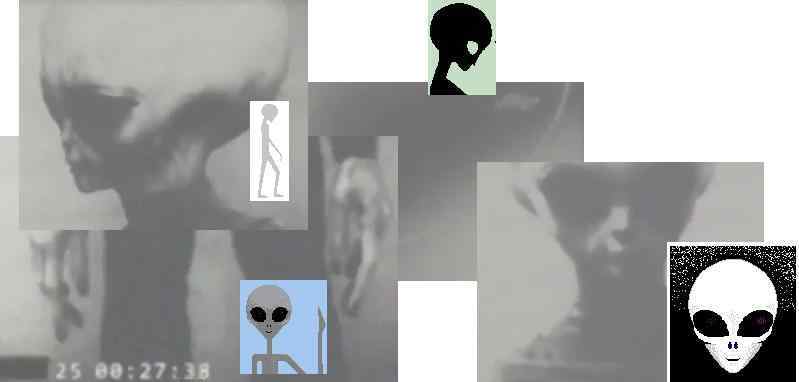
The Zetas are developing a hybrid race between humans and
Zetas. These hybrids are not currently living in 3D on Earth,
but will emerge along with full blood Zetas during times of
chaos and trouble in the near future. So what goes, during a
genetic engineering project such as the Zeta-Human hybrid
creation? Do we just mix sperm and ova together, from both sets
of parents, and hope for the best? Hardly.
ZetaTalk: Confirmation
10/15/1996: Human
participants in development of a hybrid species assume that
their eggs and sperm are taken so that the desired Zetan genes
can be mixed in during conception. Often female participants
assume that they have been impregnated via artificial
insemination, when in fact they have had the fetus reinserted
for a brief gestation period. In the main, mixing the egg and
sperm is the process, but several steps are involved.
* Prior to combining the male and female strands, the strands
are examined for undesirable traits such as heritable
diseases. Thus, it is not simply the fastest swimming sperm
that becomes daddy, nor the nearest and most available egg
that become mommy.
* After selecting the human male and female contribution,
snipping and replacing occurs. In this process Zeta genetics
routinely replace certain human genetics - some human genes
are routinely discarded, and some Zeta genes not present at
all in humans are inserted.
* In some cases genes from an ancestor are used to replace the
human genes secured from the male and female donors. Almost
invariably these are taken from data banks we maintain, but on
rare occasion we are allowed to go back in time to secure a
needed sample. This step inserts and accentuates a desirable
human trait.
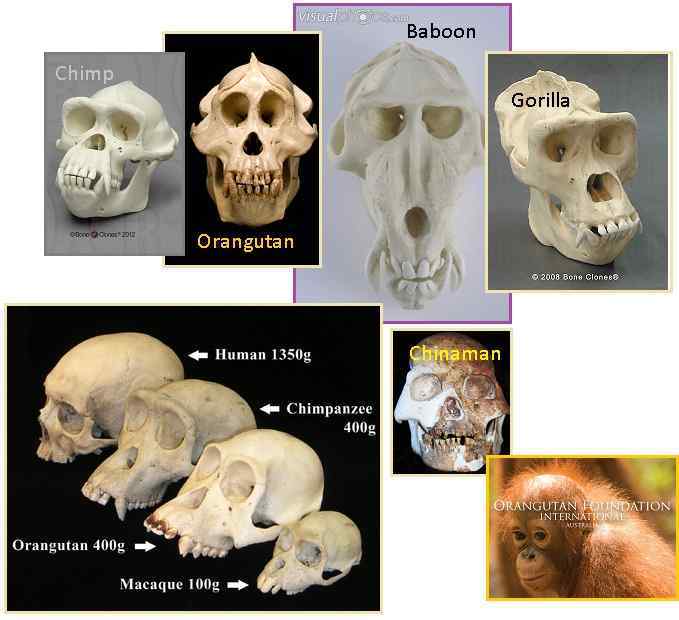
Of course, genetic engineering was used to develop man from
various apes, so these techniques are nothing new.
ZetatTalk Confirmation
7/15/1995: Man has
a fascination with his early forms for good reason. Early Man
was father to the child, and the child wishes to know whereof
he sprang. Early Man's appearance changed as his developmental
stages changed - ranging as one would expect from ape-like to
man-like. Hypothesis on his appearance almost always leans in
the direction of man-like traits, as humans feel uncomfortable
to some degree when contemplating their origins. Monkeys have
bright coloration on their faces and behinds, and so did early
White Man. Sharp prominent teeth were a characteristic of
Gypsy Man, whose grimacing face was more tooth than otherwise.
African Black Man was covered with hair, in his early stages,
and though black men of today are without beards in the main,
beards were present in the prototype. And the descendants of
China Man would be surprised to learn he had a tail for quite
some time.
Man, in each of the 6 races, was developed in stages, and
between these development stages was allowed a period of time
for things to settle down and for the genetically engineered
product to be road tested. Would it break down? Frequently
this happened, resulting in intervention, fine tuning the
product to correct whatever was deemed to be the problem.
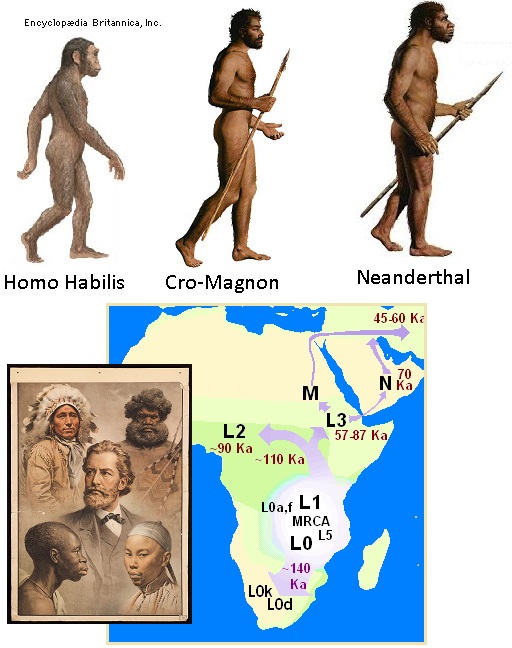
Archeologists discover bones, such as those of Neanderthal
Man, and wonder what became of him. Did he die out? Did he
evolve? It seems he rather abruptly disappeared, and such a
strapping fellow, he was!
Neanderthal Man was taken in hand to correct a problem. All of
him? Yes. This was affected by making him sterile, a simple
snip to the male, where he roamed free, and genetically
engineering those taken into the lab. So there be no
misinterpretation, let us explain that the lab did not consist
of cages, but in this instance was an island, and a paradise
at that. The lab was a controlled environment, but with no
more controls than necessary. So what were Neanderthal's
problems, and what did he become? Neanderthal, big brute that
he was, had a digestive problem. It is often assumed that he
died out because he was stupid, or confrontational, but he was
none of these and underwent change only because he had tummy
troubles. He was not living his full life, and some died
young, due to inability to digest the foods available, to take
advantage of the fauna and flora that were perforce his menu.
Coming out of his genetic correction, and returned to his
environs, he looked different - a bit like Cro Magnon Man.
The bones of Homo Erectus simply mark the evolution of more
than one race at a particular stage. Where did he go? Into the
labs to become the next stage. You can equate the puzzle
archeologists are trying to put together with litter along the
highway. Here there are Coke bottles, there plastic wrappers,
and at yet another stretch, no litter at all. If one did not
understand that litter was influenced by recycling efforts and
laws, the price paid for aluminum and glass, and the
dedication of local groups or commandeered prisoners set out
to pick the roadside clear, the patterns would make no sense.
The missing link in the evolution of man is not a particular
pile of bones as yet undiscovered, it is the teams of genetic
engineers who periodically descended on Earth to check on
their handiwork, and left when mankind had made another leap.
Kkk The current Races of Man does not include Bigfoot or the
American Indian who were transplants from other worlds.
Where everyone seemed to agree that White Man
(Caucasian), Black Man (Negroid), and China Man (Mongolian) were
separate races, they were unsure what to do with Indonesia Man
(Aboriginal, Malay, Australoid) or the American Indian. Gypsy
Man, the brown skinned residents of India and Arabia, is ignored
by human anthropologists.
ZetaTalk Confirmation
7/15/1995: The six
races of man have not all survived, but traces of their
genetics can be seen in the other races. Originally, as a
result of numerous genetic engineering efforts, the six races
were what we will term Northern White Man, African Black Man,
China Man, Indonesian Man, Gypsy Man, and Angola Man. Angola
Man has not survived, passing early and leaving no genetic
mark.
Angola Man was not black at all, but pale to the point of
being bluish. This color was due to the transparency of the
skin, which gave the oxygen depleted veins and capillaries on
the surface dominance in setting the color tone. However, this
was scarcely noticeable, as Angola Man was literally covered
with hair, fine, short, and laying flat. This was not thick
enough to be called fur, but should we have chosen to call the
original races by their appearance, rather than point of
origin, we would have called him Fuzzy Man. Angola Man was the
least aggressive of the six races, and this is in no small
degree why he passed early, leaving none of his genetic
heritage in the vast billions that swarm the surface of the
earth today. Angola Man literally allowed an attacker to
overtake him while making neither a move to escape or to
defend himself. He was eaten, regularly, until gone.
Indonesian Man in the pure form also died out, but
through casual encounters with Gypsy Man merged into what we
will call Polynesian Man. The Australian Aborigines also can
point to Indonesian Man for a large portion of their genetic
heritage, being, like the new Polynesian Man, a combination of
Gypsy Man and Indonesian Man, with the addition of some Black
Man genes due to a highly promiscuous Black Man who traveled
with a small band to that part of the world. As an oddity, and
tall in stature compared to their tallest warrior, he was
treated as a god and given all the women they could muster. He
considered this a pleasant retirement.
Indonesian Man was short and stocky, with a rounded belly. He
had a dominant forehead which protruded out over his eye
sockets, giving him the natural equivalent of shades. He was
not swift, but moved in a ponderous manner, and thus his
demise. He could not run for safety or rescue others quickly,
and his lack of agility and rounded shape prevented him from
taking to the trees or cliffs for safety. Indonesian Man had
what we might describe as a stubborn rage that when lit would
not soon quell. Where he stood to fight, and won some, he was
invariably bested by large predators. He too was eaten,
irregularly, until gone.
Gypsy Man, as the name implied, moved about. His descendants
can be seen in India and the surrounding countries, in the
Arab countries, and, of course, in the Gypsies themselves.
Gypsy Man was slight, and slid from confrontation, a factor of
his hominoid genetics as well as the root ape, which took to
the trees to escape and confronted only when escape was not
possible. He learned to plot evasion rather than employ
confrontation. This legacy can be seen today in the Gypsies,
who disappear in the night, the Arabs, who likewise fold their
tents and slip away, and the Hindus, who actively work at
evading reality through meditation when they are forced to
stick in one place and can find no escape. The hominoid
contribution to Gypsy Man was Pleiadean, so a gentle,
nonconfrontational nature compounded the desire to evade
conflict. It is not by accident that Ghandi was able to sell
the masses in India on passive resistance. It came naturally
to them.
Northern White Man first emerged in a climate that was
not at that time cold, nor was it even in Europe or the
steppes of greater Russia. White Man evolved in the deserts of
Africa, and migrated across the Mediterranean, which in those
days was not the water barrier it is today. White Man were few
at first, a few hundred, and migrated in different directions.
Some took a loop south, along the southern edges of what is
now the Mediterranean, which in those days was a swamp, and
then looped north and east. This band is seen in the large
noble noses of the Turks, Afghans, and Italians. The band that
headed straight north is seen in those with light hair and
fine features. However all are from the same stock.
Where White Man entered the world in temperate climes, bad
weather descended during a subsequent pole shift and survival
became a game not easily won. Warm clothing needed to be
constructed and fur bearing animals trapped or hunted down
with the least amount of effort. Survival required plotting
and planning, and White Man found his stock being shaped in
this manner, so that the clever planner survived. This can be
seen today in the descendants of White Man, who are innovative
and industrialized, and at the forefront of technology
developments. Of the races that survived, White Man had the
hottest temper. Quick, flashy, but quickly cooled. The root
ape for White Man defended itself by a loud bluster, shrieking
and hopping up and down. You've heard the expression, hopping
mad, and this is where it comes from. White Man, even today,
blusters and bluffs more than he engages.
African Black Man also underwent a shock to his system,
but not because of climate changes. During the pole shifts the
dice did not toss a pole into Africa, but the effects of winds
and rain patterns brought desert conditions. The particular
hominoid stock forming Black Man emerged from a portion of the
Family of Man that relied on physical skills and social
harmony, and this was the legacy Black Man carried when the
desert descended, creeping over his hunting lands until there
was less and less to share. Black Man adapted by broadening
his embrace to include more of his fellows, and today you see
this in the tradition of the extended family in most black
communities.
Black Man's inheritance was a combination of a benevolent
large ape which spent a good part of its time basking in
groups. Like the Elephant Seal, this ape had no natural
enemies, so the population was held in check by surges in the
food supply. Sometimes plenty, sometimes dearth. No need to
fight, as there was nothing to fight over. The hominoid
contribution created the capacity to plan, and did not detract
from the ape tendency to social harmony. Larger family circles
translated to forced civility for longer periods. Black Man
learned to employ violence when outside the family circle, so
this acted as a release for repressed rage not allowed to be
expressed within the circle. Early Black Man was shaped by
those factors, so that those able to suppress their
irritability until they could release away from home were kept
in the band, and the others expelled where they did not
survive to reproduce. Black on black violence occurs, but
seldom inside the family circle.
China Man was developed to offset the ruthlessness of the
inhabitants of the 12th Planet, who interbred with humans
during their mining operations. The Oriental is slight, and
given to ponder and consider the feelings of many before
proceeding. It was foreseen that Earth's humanity would grow
and eventually blend, as it has, so the ultimate Earthling was
the target, and China Man was engineered accordingly. The
hominoid stock used to build China Man was from those least
likely to be impulsive, where deliberation brought rewards and
had thus been selected for survival during evolution. In
addition, a different ape was chosen as the base, one with a
placid nature, where the apes selected for the other races did
not have this quality at the fore. These qualities can be seen
today in the descendants of China Man, who consult with one
another, proceed only when there is consensus, and succeed
best at those endeavors that require group dedication.
The Zetas explained that the American Indian was a transplant
with a slight build, which was discovered in a mummified
condition to prove the Zetas Right Again. Photos of Bigfoot and
Bigfoot/Human hybrids show the mix of genetics in Bigfoot. They
are both within the Races of Man.
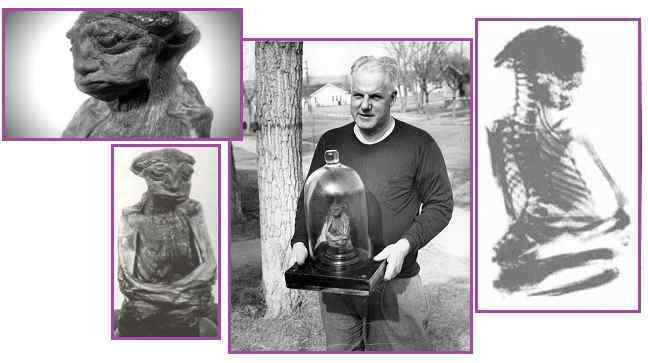
ZetaTalk Confirmation 6/15/1996: The American
Indian bears the marks of shared genetics with Asians that
crossed the land bridge to Alaska, but the root race was much
older and unique to the Americas. Unlike the six races of man,
who were formed by genetically engineering an ape of Earth,
the American Indian was a transplanted hominoid who arrived
far earlier. Why have their bones not been found? What is
discovered from the prior race of transplanted hominoids is
not recognized for what it is. This race was slight in build,
and is taken for monkey bones when found.
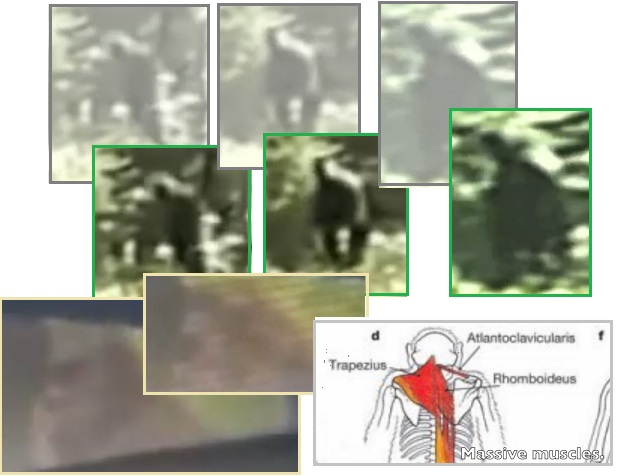
ZetaTalk Confirmation
7/15/1995 Has
Bigfoot something to do with early mankind, perhaps an early
model of man? The answer is, not surprisingly, yes! Bigfoot is
indeed an interim model of one of the six races of man. How
does it happen that only this race retained an intermediate
model? How did the others not retain this. During the
evolution of man, during periodic genetic engineering efforts,
the entire race would be affected. All within a given race
were in breeding proximity of each other, and the genetic
alterations spread out accordingly. Bigfoot was separated,
removed from the others, and moved into remote areas.
In that the Zetas are developing a Zeta/Human hybrid, they
expand the Races of Man further. A YouTube
video of an apparent Zeta, reportedly from the US files
and released in a manner protecting the source, has begun
circulating on the Internet. There are many valid points of
comparison to the Zeta drawings I, Nancy, have provided on the
ZetaTalk website. The high cheekbones, the very large dark eyes,
the nose so tiny and thin and almost vertical in placement, the
thin slit of a mouth, the neck centered under the large brainy
head. It was noted that the video does not show the Zeta
breathing, but their breathing does not cause a heaving chest
because their lungs work asynchronously, one breathing in
while the other exhales. There are over 150 Zeta types, so there
are differences to the Zetas I work with regularly. I recall the
thumb as being quite short, and this Zeta has a long thumb.
However, the fingernails are solid and strong, as I recall them
being.